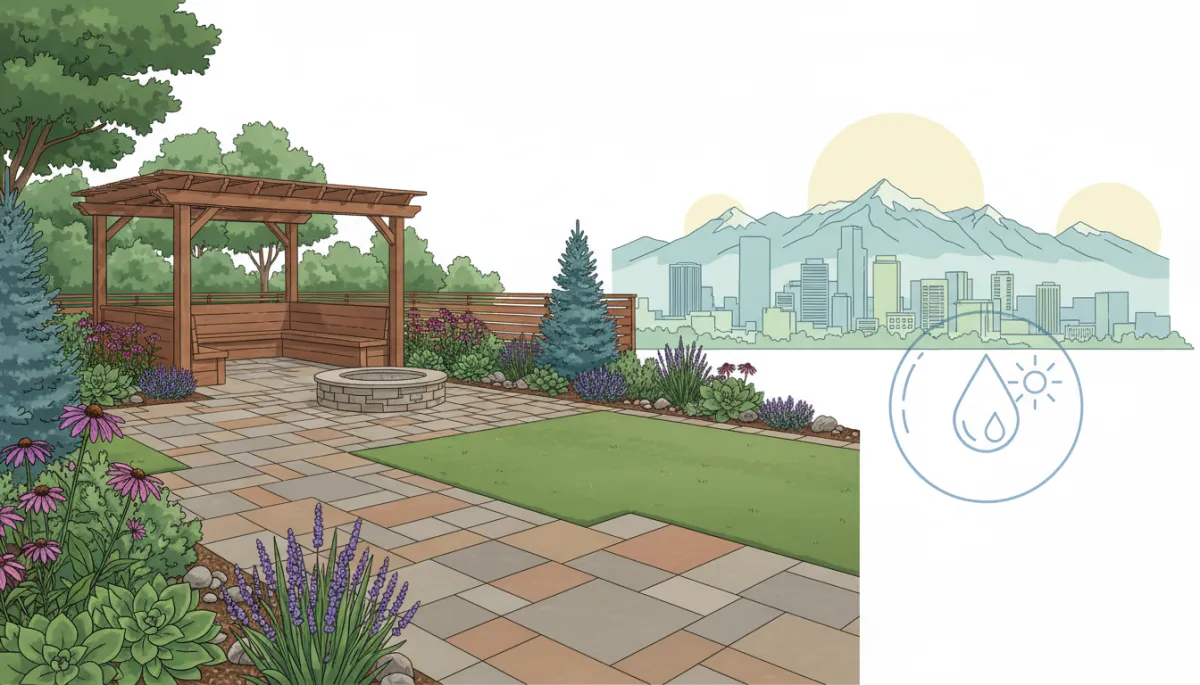
Understanding the 70/30 Rule in Landscape Design
Landscaping, 70/30 Rule Landscape Design, Garden Design Rule
What Is the 70/30 Rule in Garden and Landscape Design?
Suggested URL slug: 70-30-rule-garden-landscape-design
If you have ever looked at a yard and thought, “Something feels off, but I cannot say why,” you have already brushed up against the 70/30 rule in landscape design. This simple guideline helps homeowners create outdoor spaces that feel balanced, welcoming, and easy to maintain. At Natural Designs Landscaping, we use the 70/30 rule every week in Denver and surrounding Colorado communities to shape beautiful, functional yards that fit our semi-arid climate.
What the 70/30 Rule Means in Landscape and Garden Design
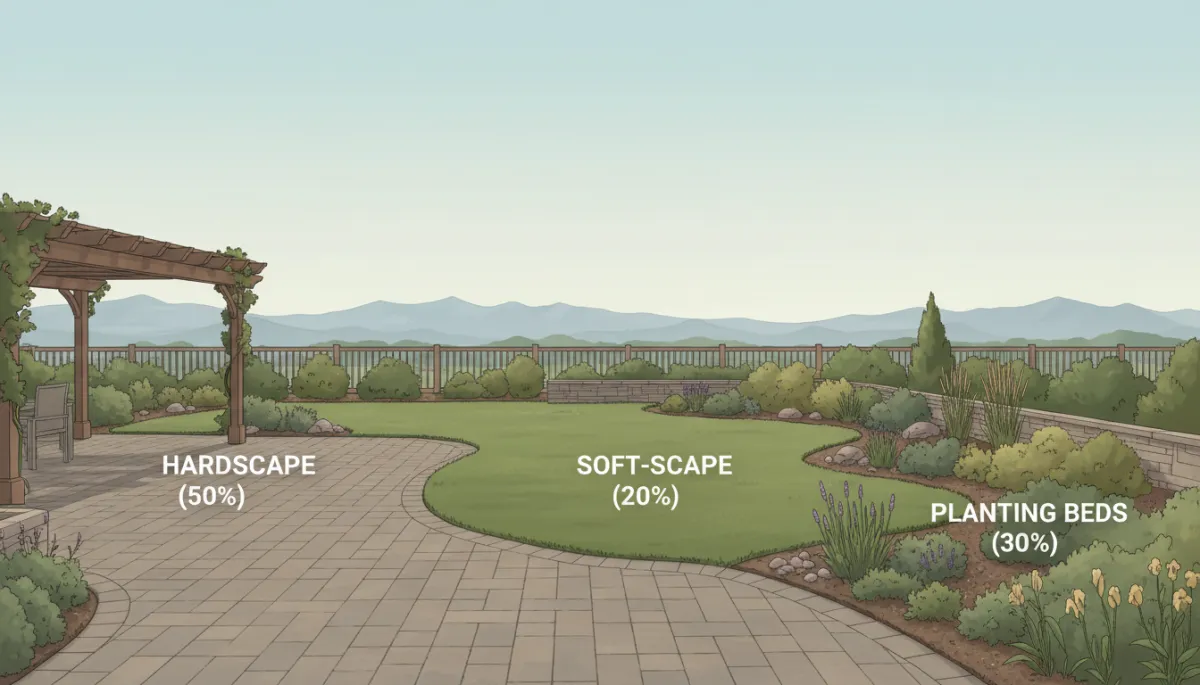
The 70/30 rule in landscape design is all about proportion. It suggests that roughly 70 percent of your yard should serve as a dominant element, while about 30 percent acts as a contrasting or accent element. In practical terms, that usually means a mix of lawn and hardscape in one category and planting beds or softscape in the other.
Some designers interpret the rule as 70 percent hardscape or lawn and 30 percent planting beds. Others flip it, using 70 percent plant-focused areas and 30 percent patios, paths, and lawn. Both approaches can work, as long as one element clearly leads and the other supports, creating a sense of visual order instead of clutter or monotony.
For example, a Denver front yard might be 70 percent low-water plantings and rock mulch, with 30 percent concrete walkway and a small seating pad. Another property in Castle Rock could be 70 percent lawn and paver patio, with 30 percent mixed shrub and perennial borders. The exact numbers are flexible, but the garden design rule itself keeps your landscape from feeling either too busy or too bare.
Applying the 70/30 Rule in Colorado Landscapes
Colorado landscapes come with their own set of challenges, from intense sun to rapid temperature swings and occasional heavy storms. Around Denver, Aurora, and Lakewood, we also deal with compacted soils and limited rainfall. The 70/30 rule helps us design outdoor spaces that look intentional and stand up to these conditions over time.
When we plan a yard in Boulder or Golden, we start by identifying how you want to use the space. If entertaining is your priority, we may dedicate about 70 percent of the area to a patio, outdoor kitchen, and simple lawn or turf for circulation. The remaining 30 percent becomes layered planting beds that soften the edges, provide color, and frame mountain views where possible.
In other cases, especially for homeowners in Westminster, Longmont, or Parker looking for lower maintenance, we may reverse the ratio. Here, 70 percent of the yard might be drought-tolerant planting, boulders, and decorative gravel, with 30 percent reserved for a compact lawn or a series of paver walkways. The key is that the 70/30 rule keeps your landscape design principles Colorado friendly, while still matching your lifestyle and curb appeal goals.
Balancing Softscape and Hardscape for a Cohesive Look
To use the 70/30 rule effectively, it helps to understand the difference between softscape and hardscape. Softscape includes living elements such as trees, shrubs, perennials, ornamental grasses, and groundcovers. Hardscape covers patios, walkways, retaining walls, boulders, decks, and even gravel or decorative rock areas.
In a balanced landscape Denver homeowners love, you rarely want a fifty-fifty split. A half-and-half yard can feel choppy, like two separate ideas competing for attention. With a 70/30 layout, one element sets the stage and the other adds interest, texture, and contrast so your eye knows where to rest and where to explore.
For instance, imagine a Centennial backyard that is 70 percent paver patio and lawn for kids and pets. Around the edges, 30 percent is devoted to softscape: layered shrubs for privacy, flowering perennials for seasonal color, and a few well-placed trees for shade. The result feels cohesive and inviting, not crowded or sparse, because the 70/30 rule quietly organizes the space for you.
Using the 70/30 Rule for Water-Wise Design in Denver’s Semi-Arid Climate
Denver and the surrounding Front Range communities sit in a semi-arid climate, which means water conservation is not just a trend, it is a necessity. The 70/30 rule can play a big role in xeriscaping and water-smart design. By carefully choosing what makes up your 70 percent and 30 percent, you can significantly reduce your irrigation needs without giving up a beautiful yard.
One approach we often recommend is making 70 percent of the landscape drought-tolerant plantings, rock mulch, and permeable hardscape. The remaining 30 percent can be a small, efficient lawn or artificial turf area for play, or a compact high-use zone near the house. This layout supports water conservation while still giving you green space and usable outdoor rooms in places like Englewood, Wheat Ridge, and Castle Rock.
We also look at how the 70/30 rule interacts with grading and drainage. In sloped yards, especially in foothill communities like Golden, we may use retaining walls and terraced planting beds as part of the 70 percent structure. The 30 percent then becomes strategically placed lawn or seating areas where water can be used most efficiently and runoff is controlled.
How Natural Designs Landscaping Uses the 70/30 Rule in Real Projects
As a local company focused on landscape design and planning, hardscaping, patios, walkways, xeriscaping, sod and turf, and outdoor living spaces, we rely on the 70/30 rule as a starting framework. From there, we adjust based on property size, views, neighborhood character, and your personal style. Every project is unique, but the underlying proportions help keep things grounded and functional.
For a recent project in Parker, the homeowner wanted a large entertaining area and minimal lawn. We designed a yard where about 70 percent of the space was a multi-level paver patio, outdoor kitchen, and fire pit area. The remaining 30 percent featured raised planting beds with native grasses, low-water shrubs, and a few accent trees that soften the hardscape and attract pollinators.
In another Denver project, the client valued greenery and a traditional look but still wanted to be water conscious. There, we used roughly 70 percent mixed planting beds and shade trees, with 30 percent lawn and a simple stone walkway network. The result feels lush and classic, yet uses far less water than a full lawn and still follows the 70/30 rule landscape design guideline for balance and flow.
FAQs About the 70/30 Landscape Design Rule
Is the 70/30 rule a strict requirement or just a guideline?
The 70/30 rule is a design guideline, not a rigid law. You do not need to measure every square foot to hit exactly 70 and 30 percent. Instead, think of it as a helpful way to decide which element should be dominant and which should play a supporting role in your garden or yard.
Should the 70 percent always be hardscape or lawn?
Not at all. In some designs, especially in more traditional neighborhoods, 70 percent lawn and hardscape with 30 percent planting beds makes sense. In many modern Colorado landscapes, though, we often flip it and let water-wise planting be the 70 percent, with lawn and patios making up the 30 percent accent.
How does the 70/30 rule help with maintenance and budget?
By choosing what fills your 70 percent, you control most of your long-term maintenance and costs. A yard that is 70 percent lawn will need more mowing, edging, and irrigation than one that is 70 percent xeriscape planting and gravel. During our design process, we walk Denver-area homeowners through these trade-offs so the final plan fits both your lifestyle and your budget.
Can the 70/30 rule be used in small yards and townhome spaces?
Yes, the 70/30 garden design rule is especially helpful in compact spaces common in Denver, Aurora, and Thornton. In a small courtyard, 70 percent might be a paver patio with built-in seating, while 30 percent is vertical planting, container gardens, and a narrow border bed. The proportions keep the space from feeling cramped while still giving you greenery and outdoor living room comfort.
How do I know which 70/30 layout is right for my property?
The best layout depends on how you use your yard, how much time you want to spend on maintenance, and your water-use goals. A conversation with a professional designer who understands local conditions can save you a lot of trial and error. At Natural Designs Landscaping, we start with your wish list, then apply the 70/30 framework to create a custom, balanced landscape for your specific property.
Ready to Design a Balanced Colorado Landscape?
The 70/30 rule is a simple idea, but it can completely transform how your landscape looks and functions. When combined with local knowledge of Denver’s climate, water restrictions, and soil conditions, it becomes a powerful tool for creating outdoor spaces that feel just right. Whether you are in Denver, Aurora, Boulder, Lakewood, Centennial, Castle Rock, Parker, Thornton, Westminster, Golden, Longmont, Englewood, Wheat Ridge, or nearby, our team can help you put this principle to work in your yard.
If you are ready for a more balanced landscape Denver neighbors will admire, we would love to talk. Contact Natural Designs Landscaping to schedule a consultation and explore custom design options for your property. Let our experienced team turn the 70/30 rule into a landscape that fits your home, your lifestyle, and Colorado’s unique environment.
Meta Title: What Is the 70/30 Rule in Garden and Landscape Design? | Natural Designs Landscaping Denver
Meta Description: Learn how the 70/30 rule landscape design principle creates a balanced, water-wise yard in Denver and surrounding Colorado communities. Discover practical examples, FAQs, and how Natural Designs Landscaping applies this garden design rule in real projects.
